Reading level 4 · First sentences · Ages 3–5
Full Basket, Empty Basket
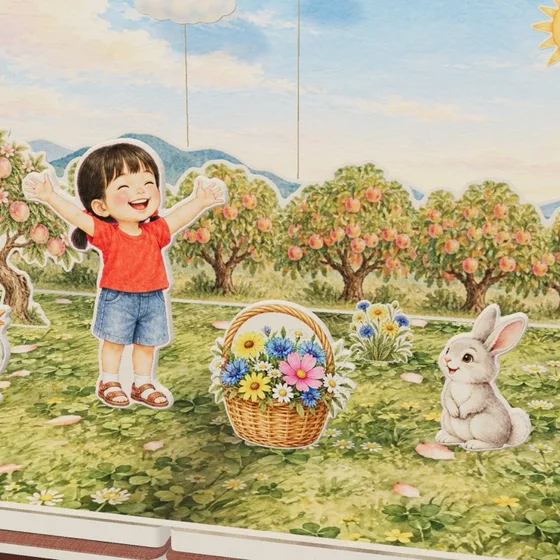
Pick, pick! The basket is full. One for Bunny, one for Bird… oh! The basket is empty. A very first book about sharing: one short sentence on every page, and the basket always shows the word.
56 words in all · 2 words to practise: full, empty
Website price: $9.99 a month or $59.99 a year, 7 days free. Every book, for every child.
 Full Basket, Empty Basket
Two ways to read
Read to me. Listen with word-by-word highlighting and a different voice for each character.
I can read. Let your child read. Tap a word for its pronunciation at normal or slow speed.
Inside the book
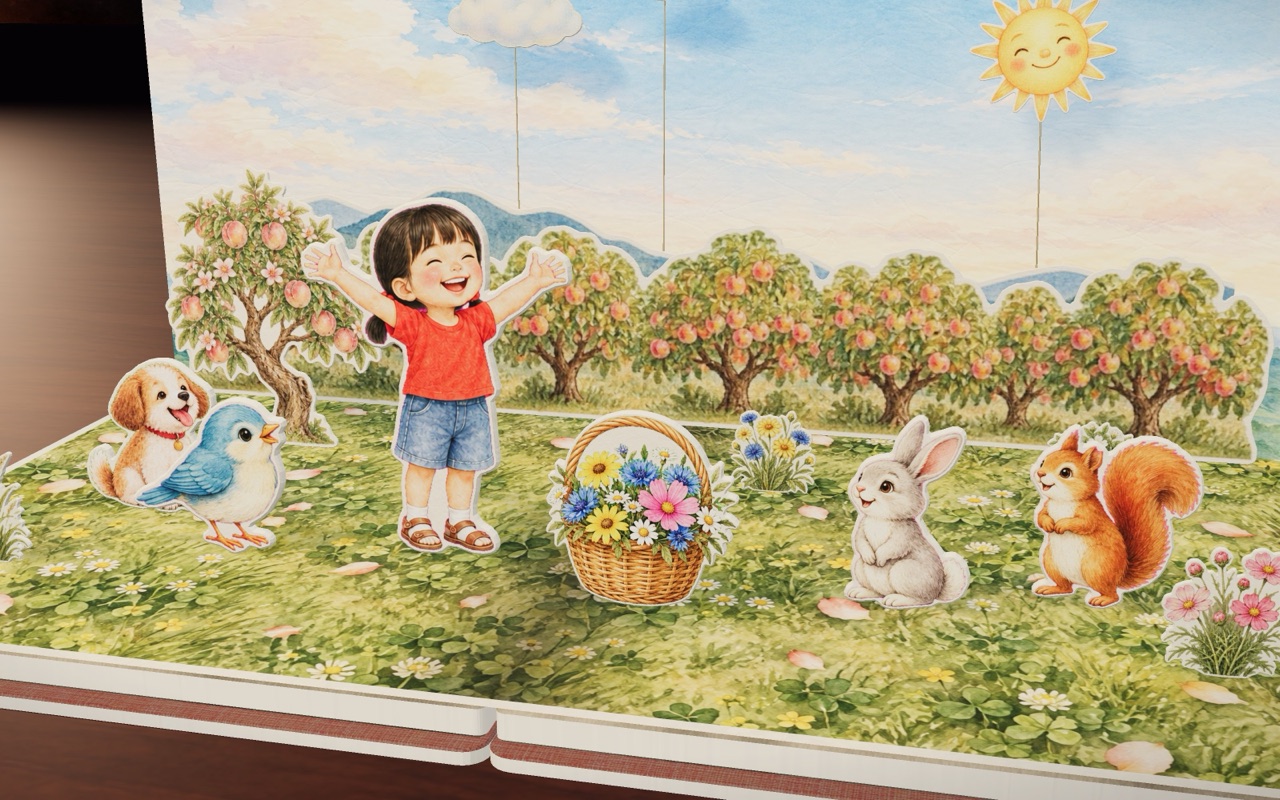
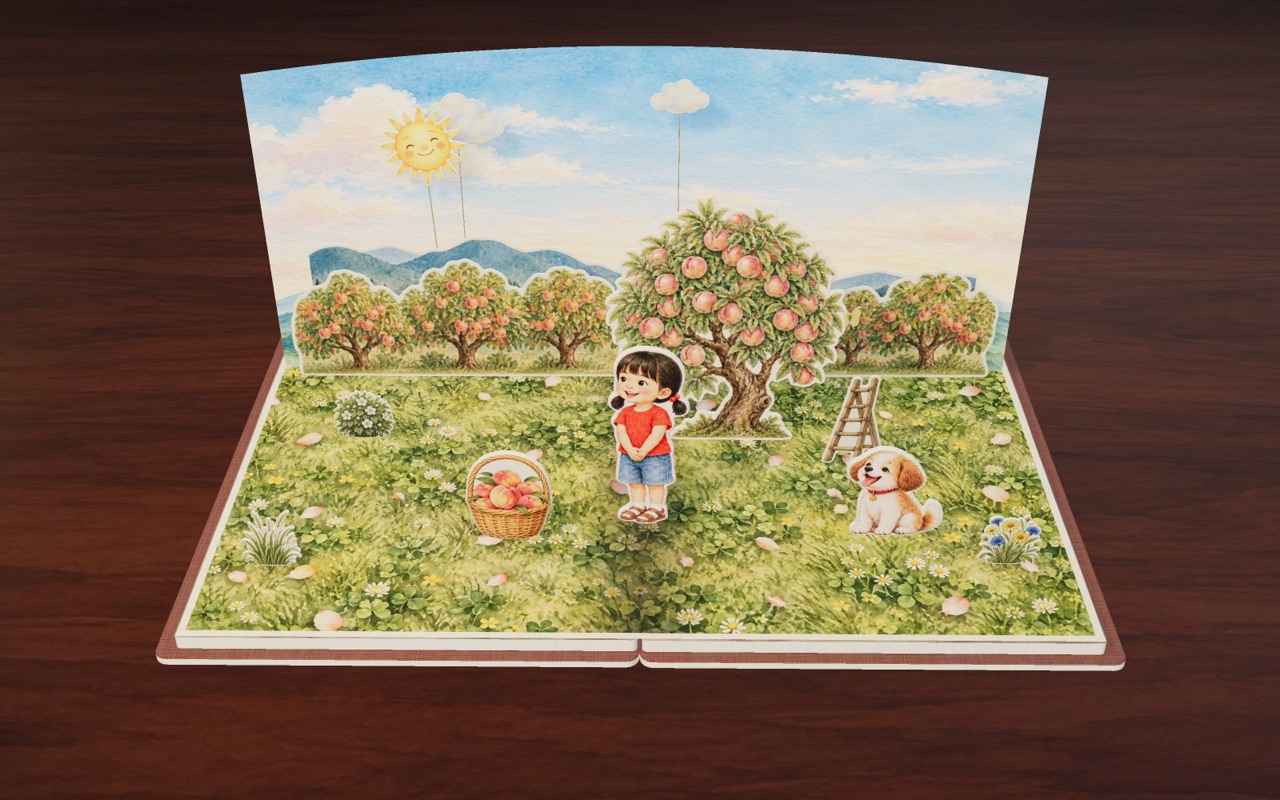
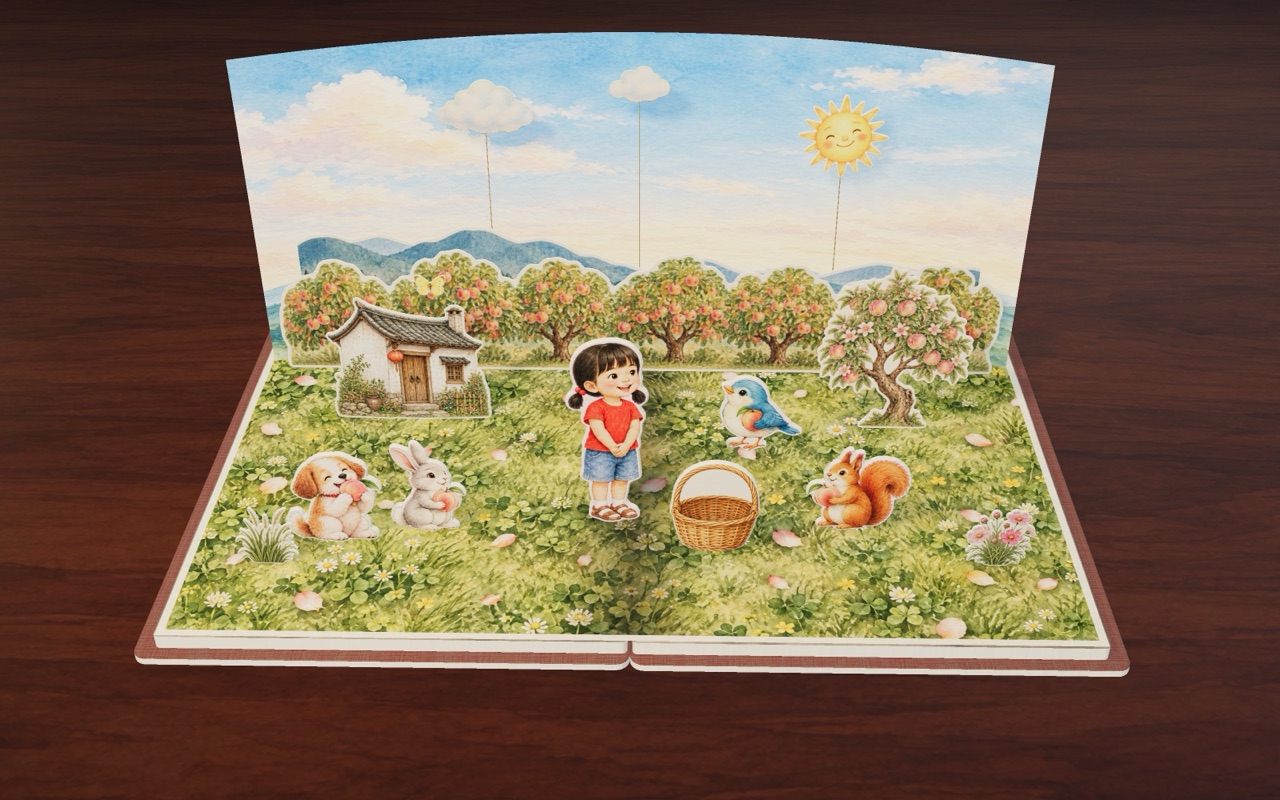
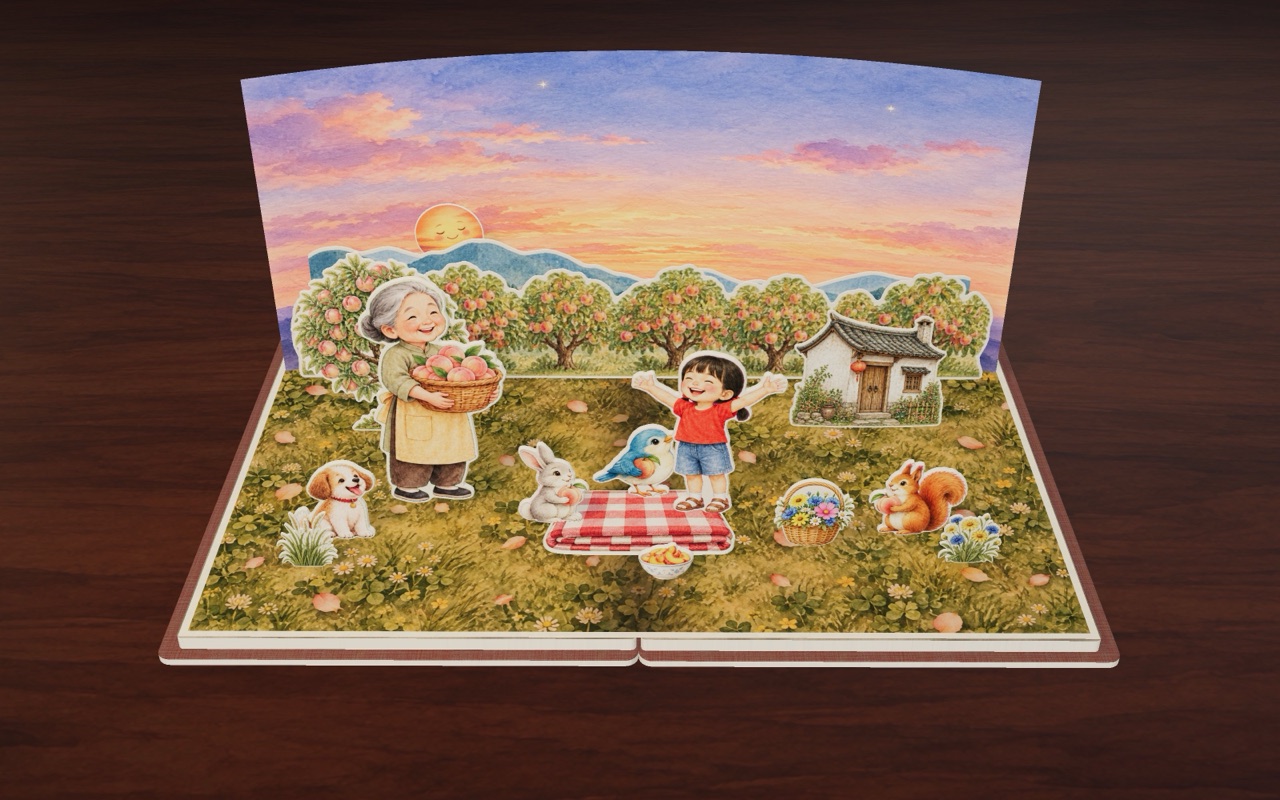
Nini has an empty basket and a whole orchard of peaches. Pick, pick! Now the basket is full. One peach for Bunny, one for Bird, one for Squirrel, one for Puppy, and oh, the basket is empty. But her friends come back with flowers, and the basket is full again. Then Grandma comes out with a basket full of peaches too, and everyone shares a picnic at sunset.
Words to practise in this book
Having as much in it as it can hold. It comes up 7 times, and every time a basket on the page really is full: heaped with peaches Nini picked, heaped with the friends’ flowers, and Grandma’s big basket of peaches.
Having nothing in it. It comes up 6 times: the bare basket at the start, and after Nini gives the last peach away she turns it right over and shakes it. Nothing falls out.
These are the story’s focus words. Your child may meet other unfamiliar words too. Tap a word to hear it.
Questions to ask while you read
Pause after each spread and ask one question. There are no right answers; the point is to get your child talking.
- 1What is in Nini’s basket? Is there anything inside?
- 2Count the peaches going into the basket. Is it full now?
- 3Who gets a peach? Point to Bunny and Bird.
- 4Who gets the next peaches?
- 5Oh! What happened to the basket? Why is it empty?
- 6What are the friends bringing back?
- 7Is the basket full again? What is it full of?
- 8What does Grandma have? Is her basket full too?
- 9Tap a basket. Is it full or empty?
- 10How many full baskets can you find at the picnic?
How hard is this book?
ReadRead levels help you choose within this library. They are not school grades or test scores. Levels 1–3 group books by phonics; levels 4–7 by story length and vocabulary.
About 50 words, one short sentence at a time, one pattern that repeats.
- Questions × 1Tap! Full or empty?
All 21 words, most used first
full 7 · basket 6 · empty 6 · is 5 · for 4 · one 4 · the 4 · hooray 2 · pick 2 · again · baskets · fill · flowers · grandma's · nini's · now · oh · or · tap · too · two
Names don’t count: the picture shows who it is.
Tips for parents
- First time: use Read to me and just enjoy the pictures together. It takes about a minute and a half.
- Act the words with a real bag or bowl: fill it up with toys for “full”, tip it over for “empty”.
- Read it again and pause before the last word of each page, so your child can say “full” or “empty”.
- Talk about sharing: Nini gave all her peaches away, and her friends gave something back. What could your child share today?